

Car Audio Capacitors
Car Audio Capacitors
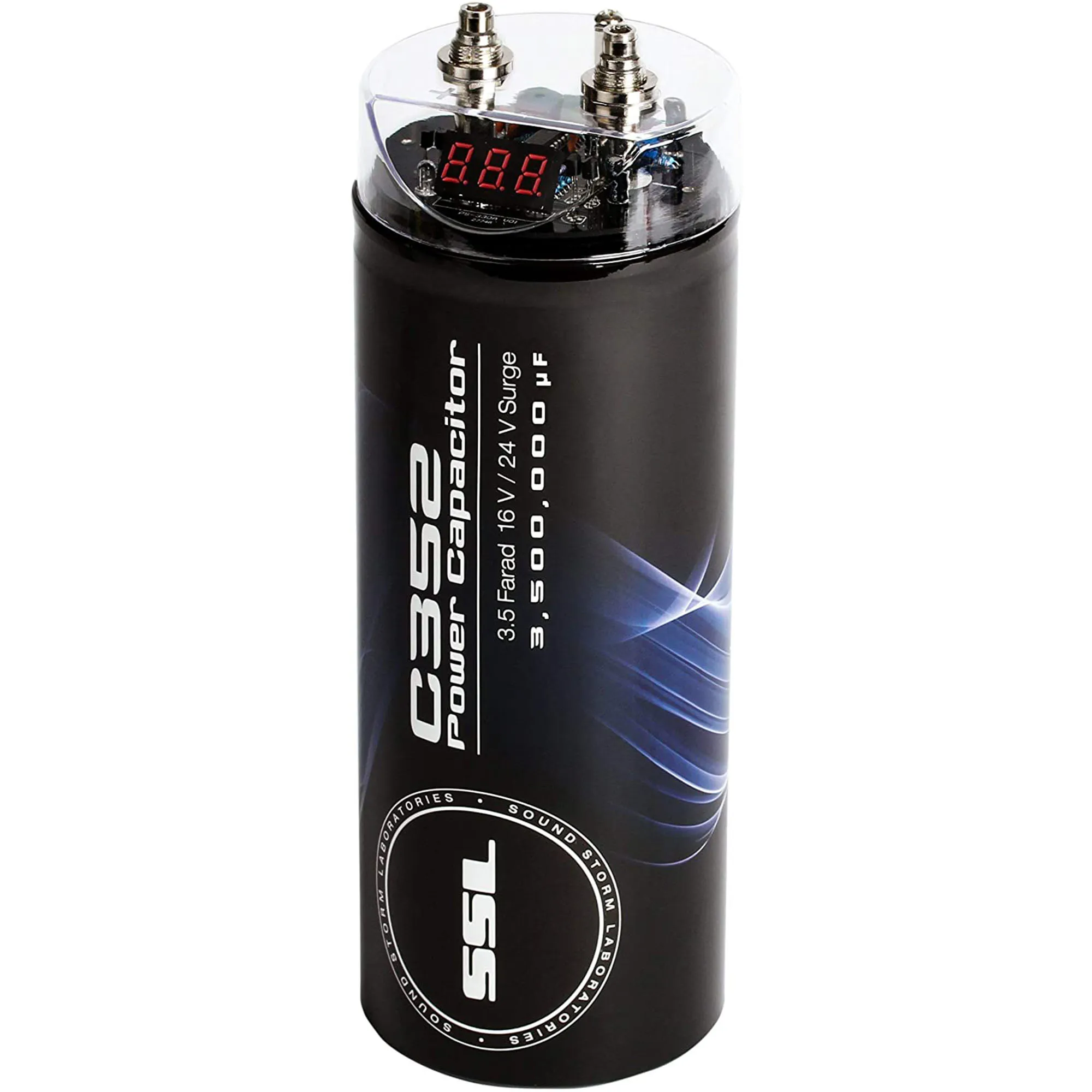
When to Add Capacitors to Your System
Do the lights in your car dim when the music plays a loud bass note?
Large Wattage Car Audio Systems
MTX Streetwire Car Audio Capacitor
Large wattage car stereo amplifiers draw large amounts of current from your vehicle’s electrical system. Larger, multiple amp systems are even a bigger drain on your electrical system, in many cases depleting the system’s current capacity thereby lowering the voltage far enough that it cannot properly supply the amplifier(s). Adding capacitors can help solve this problem.
Adding Car Audio Capacitors
Capacitors store electricity as instant power available for your amplifier. If the amplifier draws more current than is available from the electrical system directly, the capacitor covers the difference up to its stored capacity. The battery is not overloaded and the car voltage remains steady. The capacitor will smooth out the peaks in current draw from your amplifier during peaks in the music.The capacitor will help ensure your music does not go flat, but has the dynamic quality you love.
Use Caution Car Audio Capacitors
A capacitor’s stored current can give quite a shock if mishandled when it is fully loaded. Follow directions closely and ensure the cap is drained before making contact. A resistor or light bulb can be wired across the cap’s terminals to allow the capacitor to discharge slowly and safely.
Keep in mind; capacitors do not make your car audio system sound louder. What they do is improve the performance of the system by reducing distortion caused by sudden voltage drops
Voltage Stability Car Audio Capacitors
Capacitors offer some small amount of protection for amplifiers from potentially damaging under-voltage surges over time if you play loud music regularly. But most of the reason for adding capacitors is to keep your car voltage stable. Before considering capacitors, ensure you have adequate battery and alternator power for the total amperage of your audio system, and check your wiring to be sure you have adequate sized wire. Voltage loss may occur if the gauge is not adequate. If your car’s charging system does not supply enough constant current for the combined RMS rating of your amplifiers there is no amount of capacitors that will keep your electrical system from having low voltage issues when run at RMS output.
Car Audio Capacitors: How They Improve Your System
Do your car lights dim when a heavy bass drops? If so, adding capacitors to your car audio system might be the solution you need. High-wattage amplifiers draw a lot of current from your vehicle’s electrical system. When the demand exceeds what your battery and alternator can supply, voltage drops, and your amplifier may not perform at its best. Capacitors help fill the gap by providing instant power when needed, smoothing out those peaks in current draw, and keeping your audio dynamic and distortion-free.
How Car Audio Capacitors Work
Capacitors act like a short-term power bank for your amplifier. When your system demands more current than your electrical system can supply, the capacitor releases stored energy to cover the difference. This ensures that the voltage stays steady and the battery isn’t overloaded. The result? Crisp, consistent audio, with no flattening of sound during high-demand moments. While capacitors won’t make your music louder, they do enhance performance by reducing distortion caused by sudden voltage drops.
Using Capacitors Safely
Capacitors store a significant amount of electricity, so safety is crucial. Always follow installation instructions carefully, and ensure the capacitor is fully discharged before handling. A simple resistor or light bulb across the terminals allows the capacitor to discharge safely. Remember, capacitors enhance performance but don’t replace a healthy battery or proper wiring.
When to Upgrade Your Electrical System Alongside Capacitors
While capacitors stabilize voltage during peak demands, they work best alongside a strong electrical system. If your car consistently struggles with dimming lights or low voltage, consider upgrading your alternator or adding a secondary battery. A reliable electrical foundation ensures capacitors can focus on smoothing peaks, rather than compensating for an underpowered system. Together, these upgrades create a clean, consistent power supply that keeps your high-wattage audio system performing at its best.
Common Mistakes When Installing Capacitors
Even small installation errors can reduce the benefits of a capacitor. Placing it too far from your amplifier, using the wrong wire gauge, or failing to discharge it properly are common issues. Additionally, don’t rely solely on capacitors for voltage stabilization always check that your battery, alternator, and wiring can handle the total amperage of your system. Avoiding these mistakes ensures optimal performance and protects your equipment.
Sizing and Placement
Capacitors come in various sizes, typically starting at 1 Farad. A good rule of thumb is 1 Farad for every 1,000 watts RMS of system power. Some systems may benefit from even more. Place capacitors as close to your subwoofer amplifiers as possible to minimize power loss. Remember, capacitors handle short bursts of power; extended voltage drops require additional batteries or an upgraded alternator.
Protecting Your Equipment and Enhancing Performance
Capacitors not only stabilize voltage but also offer some protection against under-voltage surges that could harm amplifiers over time. By keeping the power consistent, your audio system maintains its dynamic quality and reduces strain on your electrical components. Properly installed capacitors ensure your music retains its punch and clarity, even during the most intense bass hits.
Sizing Caps
Capacitors come in different sizes typically starting with 1 Farad. The general rule is to add 1 Farad of capacitance for every 1000 watts RMS of system power. Note that it does not hurt to use more capacitance than this rule and many systems use 2 or 3 Farads per 1000 watts RMS.
Mount your capacitors as close to the subwoofer amplifiers as possible to shorten the path required for the surge power. Follow the directions for mounting and wiring closely to ensure safe and efficient use. Keep in mind that continued voltage drops that last more than a second or two might not be helped by the addition of a capacitor. In these instances it may be better to add additional batteries to the system or upgrade the vehicle’s alternator.
So consider adding capacitors to your next large audio system before the lights start dimming!